Custom USB Drive MOQ: The Four Cost Lines That Set Your Minimum
A quoted minimum order is not usually a policy. It is four fixed costs divided by a quantity until the per-unit share stops mattering to the person pricing it. Ask which of the four is heaviest and you will know whether that number can move, and what it would cost you to move it.
Four fixed lines, one variable line
Every custom USB quotation has a fixed side and a variable side, and only the fixed side sets a minimum: the body tool, the colour batch, the print setup, and the packaging print run. Each is charged once per order, so each has a quantity below which the supplier is absorbing work rather than billing for it.
The variable side — flash chip, controller, PCB, assembly — scales with quantity and never sets a floor. Three hundred pieces of memory costs three hundred pieces of money. Memory is therefore almost never the honest reason a small order is refused, even though it is what buyers assume.
You can find the culprit before you negotiate. Ask for the same design quoted at the minimum and at double the minimum, then compare line by line instead of at the total. A gap concentrated in a mould, plate or setup line identifies your minimum. A gap spread evenly across everything means the number is a policy and worth arguing about.
Tooling: stock body, open tool, new mould
Body tooling is where most minimums come from, and buyers routinely mix up three states that are priced very differently.
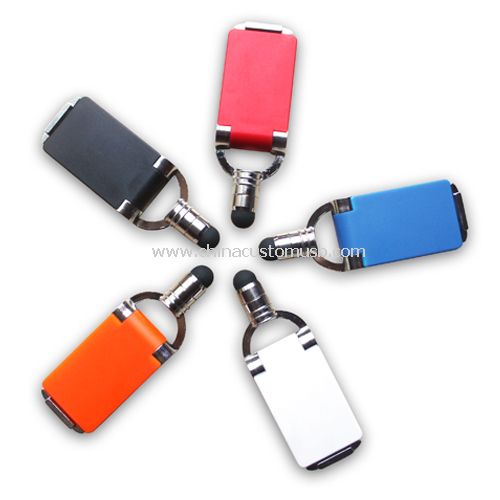
Stock body. The shell already exists in the catalogue. You pay for print and assembly, so the floor is at its lowest. The standard plastic USB drives in our catalogue are exactly this: the mould exists, and only print and assembly are charged.
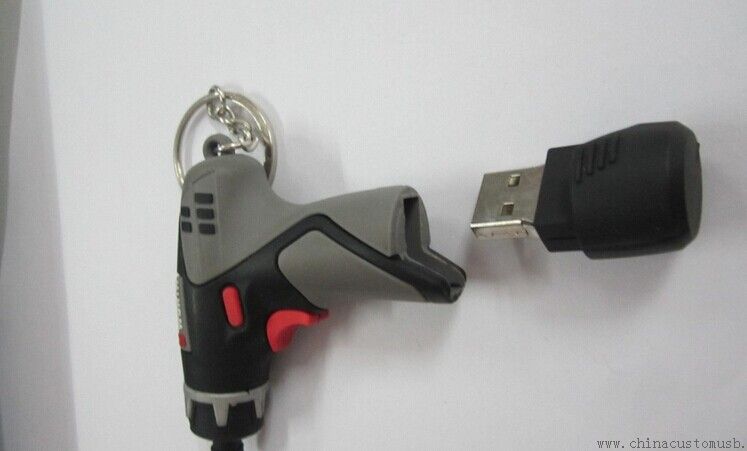
Open tool. The shape exists and the factory owns it — a rotary, a standard rectangular shell, a bottle, a character body that has been in production for years. Your logo goes onto geometry someone else already paid to create. No tooling charge, still a low floor, and you keep a shape a flat panel cannot give you.
New mould. The tool is cut for your drawing alone: 3D file, tool, first shots, correction. It has to be recovered inside the first run, which is why a fully custom silhouette carries a floor and a stock shell does not.
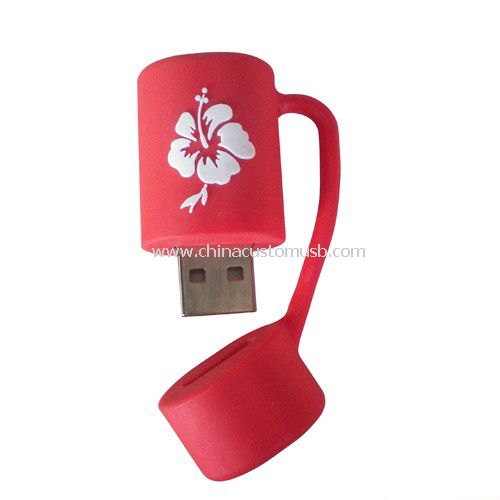
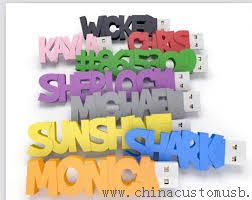
That middle case is where most buyers should be shopping. Below a few thousand pieces, if the shape is not the idea, the money is better spent on print quality and preloaded content than on a tool. Reserve a new mould for objects that carry meaning by themselves: a product replica, a mascot, a building. And remember that a tool is a one-time charge but a permanent decision — after it is cut, artwork changes are cheap and geometry changes are not.
Colour and print: where the floor quietly rises
Colour batch. Pigment for a moulded body is mixed for a run, and a short run wastes most of the mix. That is why “make the body in our Pantone” and “print our Pantone on a standard body” are priced differently: the first touches material, the second touches ink. If the colour can live in the print, the body stays a catalogue colour and the floor stays low.
Print setup. Cost rises with the number of colours and with the process. Pad printing needs a plate per colour, silkscreen a screen per colour, and laser engraving no plate at all — which makes a one-colour mark on metal or a matte surface the cheapest route to a low minimum. UV full-colour print is the opposite trade: one setup, then a photographic image with no plate count to multiply.
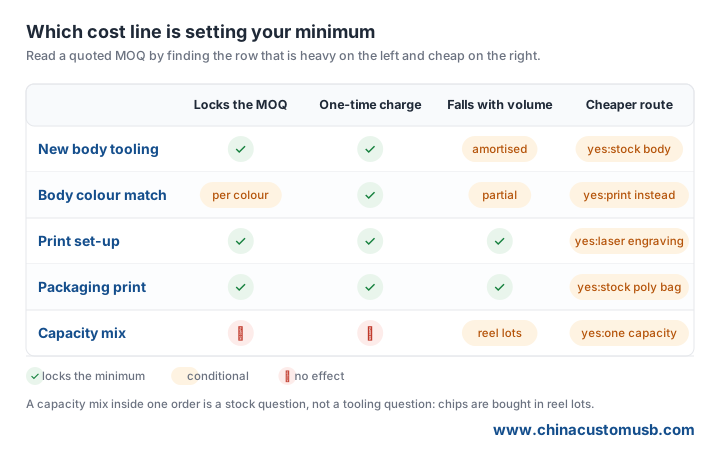
The negotiation order follows the table. Tooling and packaging lock the minimum and both have a cheaper route; print setup locks it too, but the route out is a different marking process. Capacity mix locks nothing — it is a stock question about how many chip reels the factory must open.
Packaging is the most negotiable of the four. A printed retail box carries its own plate and run, often larger than the drive’s. A stock white box, or a printed sleeve over a plain box, keeps most of the unboxing moment and removes the line.
Splitting one order across designs, capacities and dates
Splitting across designs is the most expensive way to fill a quantity. Two logos on one body means two print setups: fixed cost doubles while volume stays put, so the unit price rises. Two logos on two bodies adds a second tooling decision on top.
Splitting across capacities is a stock question, not a tooling one. Chips arrive in reel lots, so mixing 8GB and 16GB is routine at volume and awkward at the bottom of the range, where two reels get opened for a small total. One capacity per purchase order keeps the floor where it was; if you need a ladder, put the small tier on the larger quantity.
Splitting across ship dates is the compromise that usually works: one order, one setup, two deliveries. The fixed lines are paid once and the goods land when needed, which for a dated event is the only split that lowers risk instead of adding cost.
Five questions to ask before you accept the number
- Which of the four lines — tool, colour, print, packaging — is setting this minimum?
- What is the unit price at double the minimum, and does the drop come mostly from that one line?
- Is this body a stock shell, an open tool you already own, or a new mould cut for me? Can I see the catalogue first?
- Does my logo need a plate per colour, and would laser engraving remove that setup?
- Can the packaging drop to stock, and what does that do to the floor?
A supplier who cannot answer the first two is quoting a policy. One who can will usually volunteer the next price break, because the break is the argument for ordering more — a better conversation than a discount request.
Send us the quantity you actually want, the body style you have in mind, and the number of print colours in your logo. We will tell you which line is setting your minimum, what the next price break looks like, and the cheapest route to your number.
Need custom USB drives for your next project?
Factory-direct pricing, free digital proof and a 7-day sample turnaround.
Get a free quote