Custom USB vs Printed Brochure: The Cost-Per-Kept-Item Calculation
You are not choosing between a USB drive and a brochure because one is 'better.' You are choosing between two different denominators. A brochure is judged by how many you hand out; a drive is judged by how many are still in someone's hand, opened, and reused weeks later. The person approving the budget cares about the second number, and that is the one a brochure quote never shows. This worksheet gives you the structure to put both options side by side using your own numbers.
Two Different Denominators: Handed Out vs Still in Hand
The brochure world measures success in 'pieces distributed.' The USB world should measure 'pieces still useful.' A brochure that leaves the booth is a win in the print report; a drive that sits in a drawer with your preloaded deck is a win for you months later. When you build the comparison, do not stop at unit price. Carry two columns all the way down: one for cost per piece handed out, one for cost per piece still in hand at the 30-day or 90-day mark. The gap between those two columns is where the real decision lives, and only you can fill it with your own kept-rate estimate.
Filling the Sheet With Your Own Quotes
Open a simple table with five rows. Unit cost: the per-piece price you were quoted for each option. Freight: the per-piece shipping, which on a drive includes the heavier parcel and on a brochure the bulk carton. Storage: what it costs to hold the surplus before an event - brochures are flat and cheap to store, drives are small but you may still sit on a remainder. Reprint risk: the chance you need a corrected run after a price or spec change - high for a printed piece with a date on it, near zero for a drive whose content you can revise before shipping. Finally, the kept-rate column: your own estimate of how many recipients still have the item later. Fill every cell from a real quote; do not borrow industry averages, because your volume and your audience are the only numbers that matter here.
Where the Brochure Still Wins
Be honest about the brochure's strengths, because finance will. Per dollar of reach, a printed piece is hard to beat: you can put 5,000 in a hall for a fraction of a drive's cost, and the time from artwork to handout can be days, not weeks. If the goal is pure awareness at a large event, the brochure's cost per piece handed out is almost always lower. The brochure also needs no device to read, which matters for an audience that may not have a computer handy. Write those wins into the sheet so the comparison is not stacked; the drive's case has to earn its place on the numbers, not on opinion.
Where the Drive Wins
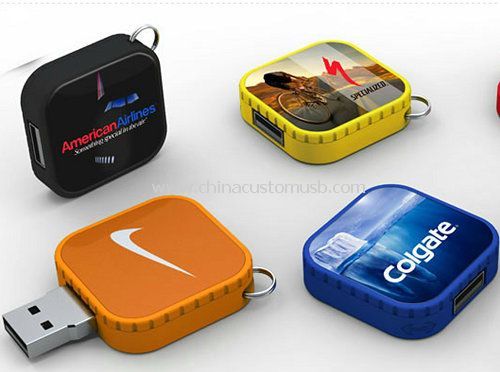
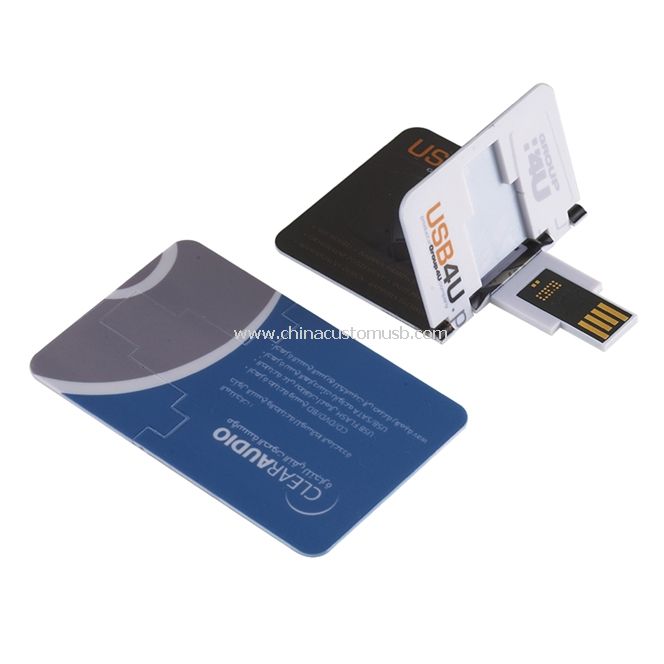
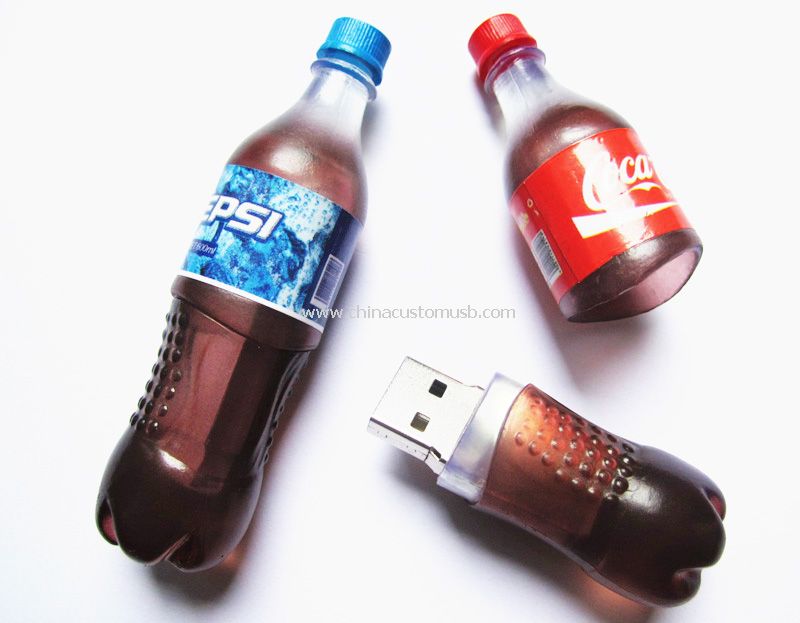
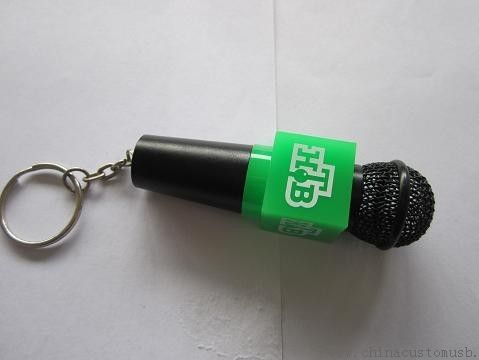
A shaped PVC body turns the item itself into the message, and the content rides inside rather than on a separate sheet.
Where the drive pulls ahead is repeat use and a handover you can count. A brochure is read once and filed; a drive is opened on a laptop, a Mac and often a phone, and every open is a fresh impression of your brand. Preloaded content means the recipient gets exactly the files you intended - no typos from a retyped URL, no stale PDF from last year. The cost per kept item can swing in the drive's favour the moment your kept-rate estimate clears a fairly low bar, because the brochure's one-and-done read never compounds the way a reused drive does.
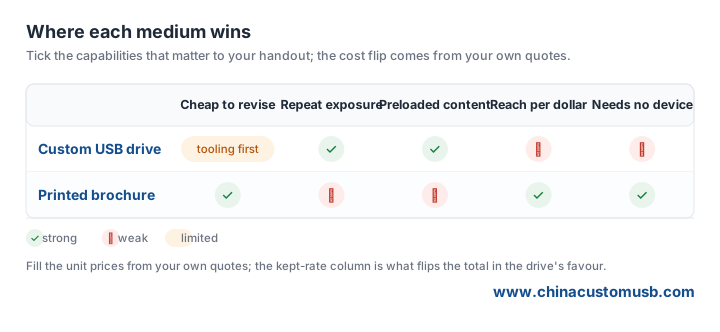
Capability Comparison at a Glance
If you only remember one view, make it this. The two media are not equal on any single axis, and the right choice depends on which capabilities your campaign actually needs.
A One-Page Worksheet to Take Into the Budget Conversation
Reduce the whole decision to one page with five rows and two option columns plus a kept-rate column. List your quoted unit cost, freight per piece, storage, and reprint risk for each, then write your own kept-rate estimate for the drive and a realistic 'still relevant' rate for the brochure. The line that decides it is the last one: cost per kept item = (unit + freight + storage + expected reprint) divided by kept count. Send the print run size and the brochure unit price you were quoted; we will put both options on one worksheet and mark the quantity where the drive overtakes print, so you walk into the budget meeting with a number finance can check rather than a claim they have to trust.
Need custom USB drives for your next project?
Factory-direct pricing, free digital proof and a 7-day sample turnaround.
Get a free quote