USB Drive Gift Box Options: Tin, Paper, Magnetic and Flat-Pack Choices
A gift box for a custom USB drive is never free, and it is never the same line item as the drive. On every quote it sits on its own row because the box drives freight weight, print area, assembly labour and in-transit damage separately from the memory inside. This guide walks through the four box formats buyers actually choose between — tin, paper/card, magnetic-closure and flat-pack — and the trade-offs that decide which one protects the drive and keeps the unboxing on-brand.
Why the Gift Box Is Quoted Separately From the Drive
The drive is a fixed component with a known unit cost. The box is packaging, governed by a different bill of materials: the board or tin, the print, the insert and the assembly step. Those four inputs do not move in lockstep with the drive, so they are priced on their own row.
Freight is the first split. A rigid tin ships at its full size and weight; a flat-pack card box ships collapsed and is folded at the destination. The same 500 drives can occupy two very different cube weights depending only on the box, which changes the freight line even when the drive price is identical.
Print is the second split. Artwork on the box is its own prepress step — a proof, then a plate or screen — and the print area on a box lid is usually larger than the print area on the drive itself. Swapping the box format lets you change branding coverage without re-pricing the memory, which is exactly why the box earns its own quote row.
Tin Boxes: Where the Metal Body Earns Its Freight
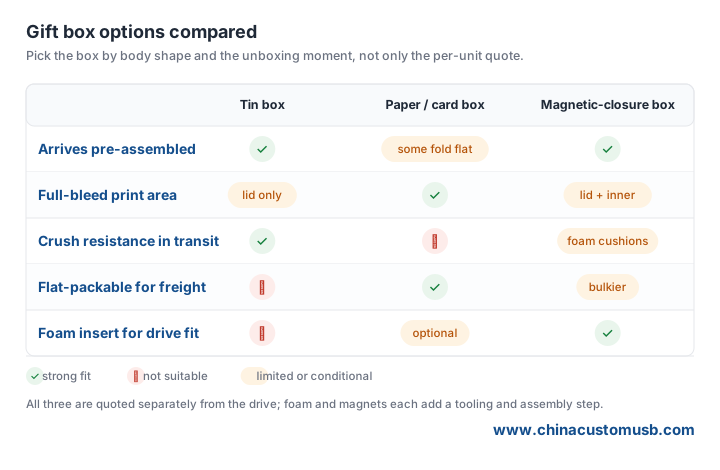
A tin box is a tinplate shell, typically 0.20 to 0.28 mm thick, that holds its shape under stacking pressure and ships already assembled. That rigidity is the whole point: the box survives mailing without an outer carton, which is why tin shows up on anniversary, reunion and keepsake programs where the recipient is expected to keep the container.
The trade-off is weight and print coverage. The metal adds the most dead weight per unit of the four formats, so it carries the highest freight for the same drive count. Branding sits on the lid — offset or screen print — while the side walls are narrow curved bands, so the large printable surface is the top face only, not the full wrap a card box gives you.
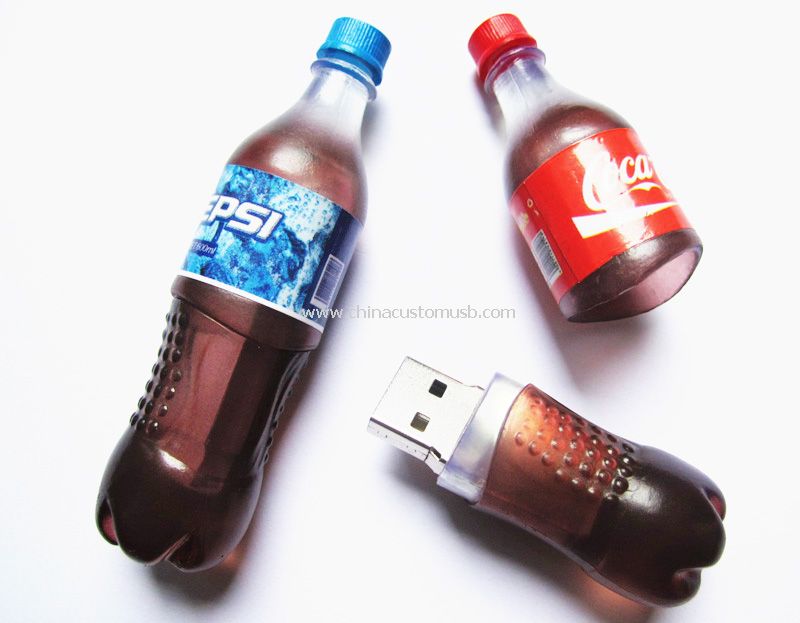
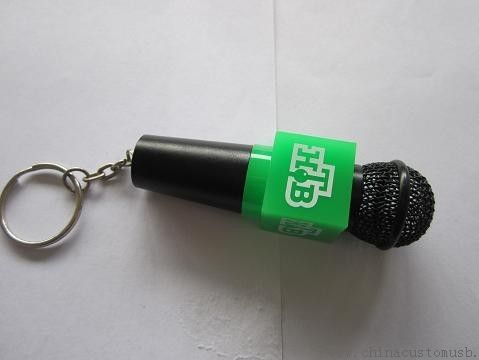
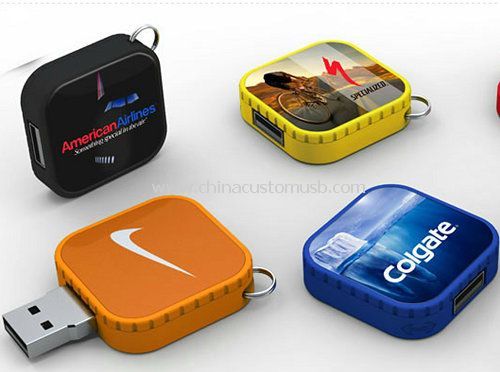
Fit is the quiet limitation. Most tin boxes hold the drive in a molded tray or a simple clip rather than a cut foam, so a shaped body — a bottle, a microphone, a rotary — can rattle unless the tray is made for that exact outline. If the body is rectangular, as the rotary above is, tin is an easy, durable choice.
Paper and Card Boxes: Print Area Versus Crush Resistance
A card box, usually built from 300 to 400 gsm board, gives the largest flat print area of the three common formats. Front, back and spine can all carry a full-bleed logo, which is why card is the default when branding coverage matters more than reusability and the box is discarded after handover.
The weakness is crush resistance. Folded flat for shipping, a card box has the lowest freight cube of the group, but once assembled it collapses under pallet stacking unless it has an inner tray. That tray — a folded insert or a sleeve — is what actually holds the drive and stops it printing against the box wall. Without it the drive slides and the print scratches.
So the real card-box decision is not card versus tin, it is card-plus-tray versus a rigid box. Card wins on print and freight; it loses on protection unless you pay for the insert that makes it rigid in transit.
Magnetic Closures and Foam Inserts: The Fit Problem
A magnetic-closure box is a rigid wrapped box — card wrapped in printed paper — with a magnetic flap and a cut foam insert cradle. The foam is cut to the drive body, so a shaped USB sits without movement. This is the one format that genuinely fits non-rectangular bodies, which is why it is the answer when the drive itself is the hero of the gift.
The catch is assembly and tooling. The foam must be cut to your exact body, so the body shape has to be fixed before sampling; a late change to the drive means a new foam die. The box is also the most assembly-intensive: foam cut, box build, magnet fitted. It arrives assembled or folds with the magnet adding bulk, and each of those steps adds cost per unit over a plain card box.
For a premium unboxing — flap lifts, drive rests in foam — the spend is justified. For a high-volume trade show handout, it usually is not, and a card box with a tray does the job for less.
Flat-Pack or Assembled: Storage, Labour and Damage in Transit
The last decision is who folds the box. Flat-pack means the boxes ship collapsed and your team or your fulfilment partner folds and inserts at the warehouse. That saves freight and storage cube, but it adds labour per unit and a small hand-assembly defect rate — a crease in the wrong place, a tray in backwards.
Assembled means the boxes arrive built and you drop the drive in. Pack-out is faster and the factory absorbs the labour cost, but you pay for the full cube all the way from the factory and for the assembly step itself. For low volume or a premium gift, assembled rigid boxes are worth it; for high volume on a tight margin, flat-pack card with a tray is the cheaper path.
Damage risk follows the same logic. Rigid boxes — tin and magnetic — protect the drive in transit on their own. A flat card box needs an inner tray or an outer carton or it crushes under stack weight. The box you choose is the difference between a drive that arrives presentation-ready and one that arrives in a bent sleeve.
Which Box to Brief Before the Bulk Order
Start from the body shape and the unboxing moment, not the per-unit box quote. A rectangular drive in a high-volume handout wants a flat-pack card box with a tray. A shaped drive in a premium gift wants a magnetic-closure box with a foam cradle. A keepsake that gets mailed and kept wants a tin. Each is quoted on its own row precisely so you can switch formats without disturbing the drive price.
Send us your drive size and the artwork area you want printed, and we will ship box samples with an insert cut for that body so your team can test the fit before the bulk order.
Need custom USB drives for your next project?
Factory-direct pricing, free digital proof and a 7-day sample turnaround.
Get a free quote